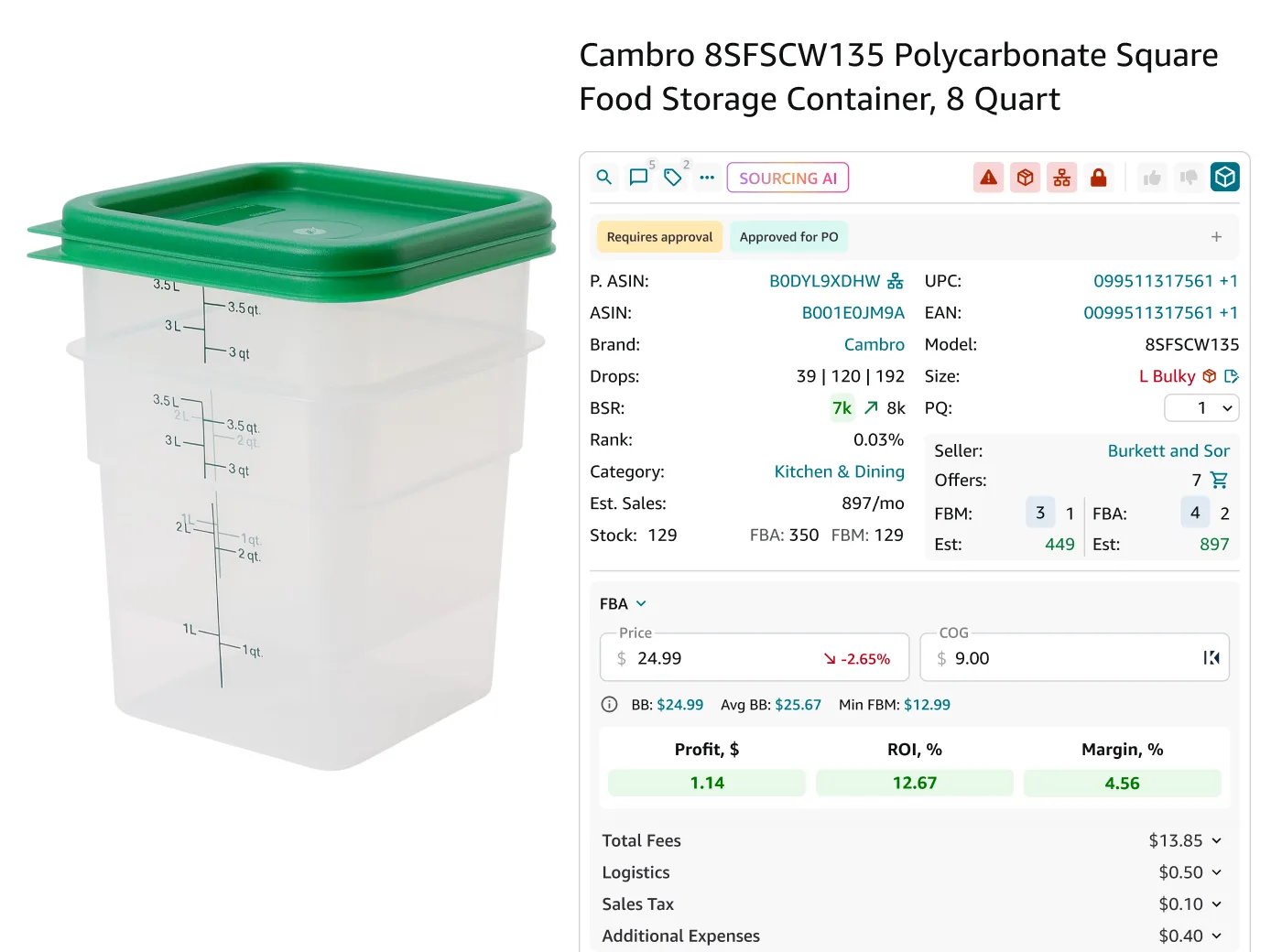


The best Amazon FBA product ideas in 2026 are small, light products that sell every month, fit the standard size tiers, and are not gated on your account. Seller Assistant’s data from 13.5 million supplier lines shows where these products are easiest to find: Beauty & Personal Care, Kitchen & Dining, Arts, Crafts & Sewing, Sports & Outdoors, Pet Supplies, Grocery & Gourmet Food and Toys & Games. Below are product ideas for each of these categories, the categories to approach with care, and a checklist to find profitable products in your own niche before you buy inventory.
This list is for sellers who send inventory to Amazon FBA as wholesale resellers or private label brands. If you look for single items to flip, read our guide to the best items to resell. For the best-selling categories and brands on Amazon, see what to sell on Amazon.
What Changed for Amazon FBA Products in 2026?
Three fee changes affect which product ideas still work in 2026 (as of October 2026):
- On January 15, 2026, Amazon increased US FBA fulfillment fees by an average of $0.08 per unit and added no new FBA fee types (Amazon’s announcement).
- On April 17, 2026, Amazon added a 3.5% fuel and logistics surcharge to FBA fulfillment fees in the US and Canada. Amazon calculates it as 3.5% of the fulfillment fee, and it averages about $0.17 per unit in the US. Larger items pay more (Amazon’s notice in Seller Forums).
- From October 15, 2026 to January 14, 2027, holiday peak fulfillment fees apply, and Q4 storage fees are higher than in the rest of the year.
Referral fees did not change. Most categories pay 15%. Beauty, Health & Personal Care and Baby pay 8% on items of $10 or less, and Grocery pays 8% on items of $15 or less (Amazon’s fee schedule).
Seller Assistant’s State of Amazon Wholesale, Q3 2026 shows what these changes did to real products. For the median product, Amazon’s cut stayed at about 40% of the sale price after the fee increases. The larger pressure came from suppliers: 2 of 3 supplier price changes were increases, and the usual increase was about +10%. Estimated sales decreased by about 2%, and 63% of the items in this year’s supplier catalogs are new.
Small standard items are the safest choice in 2026, because the surcharge grows with the fulfillment fee. A product that worked last year needs a new check, because most catalogs changed. And a product with profit at today’s supplier cost can lose it after one price increase, so leave room in the margin.
How to Start Looking for Amazon FBA Products
Before you pick a product, decide on your sourcing model. It sets where your research starts.
Bulk sourcing: wholesale and private label
Wholesale sellers start with a supplier, usually a brand or a distributor. They select a supplier, analyze its price list and keep the products that are profitable on Amazon. Private label sellers start with a product type, find a manufacturer, and sell the product under their own brand. Both models buy in volume, so one wrong product costs more than in arbitrage.
Single-unit sourcing: online arbitrage
In online arbitrage, the research starts on Amazon. You find products with steady sales and few sellers, then look for a retail store that sells the same product for less.
Wholesale starts with the supplier, private label starts with the product type, and arbitrage starts with Amazon product research.
Best Amazon FBA Product Categories for 2026
The State of Wholesale report counts “leads”: products with an Amazon listing that you can check, 20% ROI or more, at least 5 estimated sales a month, and no Amazon Buy Box. The table shows the leads per 1,000 supplier lines that found an Amazon match (all categories: 55). The data comes from 13.5 million lines that 782 wholesale sellers uploaded to Seller Assistant between July 2025 and August 2026 (Amazon.com).
| Category | Leads per 1,000 matched lines | What else the data shows | Referral fee |
|---|---|---|---|
| Beauty & Personal Care | 125 (median seller: 93) | 46% hit rate, 41% of listings locked, flat demand | 8% up to $10, 15% above |
| Kitchen & Dining | 118 (median seller: 151) | Amazon on 36% of listings, reorder cost +5% | 15% |
| Arts, Crafts & Sewing | 85 | Offers −13%, lowest catalog rotation (32% new items) | 15% |
| Sports & Outdoors | 83 | 51% hit rate, estimated sales −7% | 15% |
| Pet Supplies | 76 | 62% of listings locked | 15% (22% for veterinary diets) |
| Grocery & Gourmet Food | 72 | Most open category (38% locked), many multipacks | 8% up to $15, 15% above |
| Toys & Games | 71 | Amazon’s presence −6.3 points, sellers leave | 15% |
“Hit rate” is the share of price-list items the median seller can sell at break-even or better. A “locked” listing is one where one seller wins the Buy Box 80% of the time or more. The data comes from wholesale price lists, so it measures resale. For private label, use it as a signal of where demand and margin are, and check each product type on its own.
Beauty & Personal Care
This category has the most leads in the report and a low lock rate. Items are small and light, and customers buy many of them again. Items priced at $10 or less pay an 8% referral fee. Gating is the main risk. Many beauty brands and topical products (creams, serums, lotions) need approval or compliance documents. Electric devices add electrical safety rules and more returns.
Product ideas that avoid most of these risks:
- Silicone scalp massagers and shampoo brushes: small standard size, no ingredients to approve.
- Glass nail files, cuticle pushers and manicure tool sets: light, with a low return rate.
- Heatless hair curling sets: soft and light, with nothing to plug in.
- Reusable makeup remover pads: customers reorder them, and they are easy to bundle.
- Refillable travel bottle sets: small, with demand all year.
- Microfiber hair towel wraps: light and hard to break.
Kitchen & Dining
Kitchen & Dining gives the median seller 151 leads per 1,000 matched lines, the best result in the report. Amazon sells on 36% of the listings, and the median reorder cost increased by 5% while selling prices did not. Anything that touches food must meet FDA food-contact rules, and glass and ceramics break in transit.
- Silicone baking mats: reusable, flat and light.
- Air fryer parchment liners: a consumable that customers reorder.
- Magnetic spice racks: they solve a storage problem and rarely come back.
- Measuring spoon and cup sets: small, sold all year.
- Dough scrapers and pastry tools: light and simple, good for bundles.
- Butter keepers and garlic peelers: low cost to source, with gift appeal.
Arts, Crafts & Sewing
Sellers are leaving this category (offers −13%), and its catalogs change least: only 32% of the items are new this year. For a wholesale seller, the same supplier catalog keeps giving leads. Watch the IP risk on branded refills and cutting machine supplies, because brand owners file complaints on them.
- Sewing notions: seam rippers, fabric clips, measuring tapes.
- Self-healing cutting mats: flat and light.
- Embroidery and cross-stitch starter kits: good gift items in Q4.
- Bead and thread storage organizers.
- Water-based paint marker sets. Check the hazmat status first, because some paints and markers are dangerous goods.
Sports & Outdoors
Sports & Outdoors has 83 leads per 1,000 and a 51% hit rate, but estimated sales decreased by 7%. Base your order on current sales. Avoid weights, benches and other large equipment: they fall into oversize tiers, where the fulfillment fee and the 3.5% surcharge on it are highest.
- Resistance band and loop sets: small and light.
- Pickleball accessories: overgrip tape, paddle covers, ball retrievers.
- Jump ropes and hand grip strengtheners.
- Quick-dry microfiber sports towels.
- Hydration bladder cleaning kits: a replacement purchase for hikers and cyclists.
Pet Supplies
Pet Supplies has 76 leads per 1,000, but 62% of the listings are locked, so check who wins the Buy Box before you buy. Pet food and supplements bring extra compliance, and veterinary diets pay a 22% referral fee. The ideas below are accessories and consumables.
- Dog waste bags and dispensers: customers buy them every month.
- Lick mats: light and easy to ship.
- Grooming gloves and deshedding brushes.
- Pet hair remover rollers and refills.
- Treat pouches for training.
Grocery & Gourmet Food
Grocery is the most open category in the report, with only 38% of the listings locked. It is a wholesale category. One supplier line matches 1.6 Amazon listings on average, so check each pack size before you calculate profit. Items of $15 or less pay an 8% referral fee. FBA accepts expiration-dated products only with enough shelf life left, and meltable products only in the cooler months. Many grocery brands are gated.
- Shelf-stable snack multipacks from brands with wholesale accounts.
- Spices and seasoning blends.
- Specialty tea and coffee.
- Gluten-free, keto and other diet-specific snacks.
- Baking decorations such as sprinkles and food coloring sets. Check the meltable rules for chocolate-based items.
Toys & Games
Amazon’s presence on Toys & Games listings decreased by 6.3 points, and other sellers leave too, so more listings become available. Toys for children 12 and under must be tested and need a Children’s Product Certificate under US rules. Amazon also sets holiday selling requirements for Toys & Games each Q4, so check them in Seller Central before you plan Q4 stock.
- Jigsaw puzzles (500 to 1,000 pieces).
- Card and board game expansions from authorized distributors.
- Kids’ craft kits.
- Sensory and fidget toys. Check the age grading and the small-parts warnings.
- Sidewalk chalk and outdoor play sets.
Categories to approach with care in 2026
| Category | Why to be careful |
|---|---|
| Clothing, Shoes & Jewelry | 110 leads per 1,000, but 93% of the items are new each year and supplier costs increased most (+8% median cost, −5.9 points margin). Referral fee 17% above $20, and returns are high |
| Automotive | Estimated sales decreased most of all categories (−23%) |
| Electronics | 23 leads per 1,000. A usual supplier cost increase removes 38% of the leads |
| Baby | 25% hit rate, and Amazon sells on 42% of the listings |
| Books | 21% hit rate, 64% of listings locked, Amazon on half of them |
| Health & Household | 39% hit rate, and most listings are locked |
| Large appliances and furniture | Oversize fulfillment fees, and the 3.5% surcharge grows with the fee |
Source: State of Amazon Wholesale, Q3 2026, Amazon.com. The appliance and furniture row comes from Amazon’s fee rules.
Which Products Work Best for Each Sourcing Model
What you choose to sell should match how you source it.
Wholesale
Wholesale sourcing works best with branded products that already sell on Amazon. You compete on price, stock and speed, because the listing already exists. Good fits:
- Branded household goods and consumables with high monthly sales.
- Grocery, beauty and pet consumables from brands that sell through distributors.
- Craft and office supplies from catalogs that change little from year to year.
- Seasonal products bought off-season for resale at peak demand.
Private label
Private label works best with simple products that you can improve and brand: kitchen tools, beauty tools, pet accessories and sports accessories from the lists above. Pick products with clear customer complaints in the reviews of the top listings, a price that leaves room for ads, and no patents or certifications that you cannot get. Read private label vs online arbitrage for the trade-offs.
Online arbitrage
Online arbitrage needs products that sell fast, so you do not pay storage for long. Good fits are retail clearance items, toys before Q4, lightweight kitchen and beauty tools, and brand-name personal care items. Buy small quantities and resell them on Amazon while the price gap is open.
How to Tell If a Product Idea Is Worth Selling on Amazon
A product idea is worth buying when it sells every month, gives a margin after all fees, and carries little risk. Check these points before you order.
Eligibility and restrictions
Check that your account can sell the product. Some brands, categories and products are gated and need approval. See the restricted products guide, and do not buy until the ASIN shows as sellable on your account.
Profit after 2026 fees
- Profit = Selling price − COGS − Amazon fees − logistics − tax
- ROI = Profit ÷ (COGS + tax + logistics) × 100%
- Margin = Profit ÷ Selling price × 100%
The State of Wholesale report counts a product as a lead at 20% ROI or more, which is a practical minimum for a first order. Include the 3.5% surcharge in the fulfillment fee, and add the Q4 peak fees for products you will sell between October 15 and January 14. Compare FBA and FBM, and see how to calculate FBA fees.
Demand
In the State of Wholesale data, half of the supplier lines with 20% ROI or more sell fewer than 5 units a month. Check the Best Sellers Rank, the BSR trend over 90 days or more, and the estimated monthly sales. Estimated sales decreased in most categories this year, so plan your first order on current sales.
Competition and the Buy Box
The median listing has 3 offers, but 49% of the listings with Buy Box history are locked by one seller. Before you buy, find who wins the Buy Box and how often. Avoid listings where Amazon holds the Buy Box, and one-seller listings where a private label brand owns the product.
Price history
Check the Buy Box price history, for example in Keepa charts. A falling or unstable price usually means a price war and thin margins.
Product risks
- Heavy and bulky items pay higher FBA fees and a higher surcharge.
- Fragile items need more packaging and come back more often.
- Meltable items go into FBA only part of the year.
- Hazmat items need approval and special handling.
- About 3 in 10 products in the State of Wholesale data have an IP-risk flag, and an IP complaint can remove your listing.
Variations and pack sizes
BSR applies to the whole parent listing, so check which variation sells. If the listing is a 3-pack, source in multiples of 3 when you calculate profitability.
How to Validate Product Ideas with Seller Assistant
Seller Assistant (our product) checks product ideas at three levels: the brand, the supplier price list and the single product.
Check if a brand is worth reselling
Brand Analyzer takes up to 1,000 brands at once. Each brand comes back with estimated revenue, distribution type, active catalog size, average sellers and the Amazon Buy Box rate, plus a resale potential score built on 9 signals. Open a brand to see every product it sells on Amazon, then send the product list to the Bulk Restriction Checker. It checks up to 20,000 ASINs in one batch on your own account and marks each one as sellable, gated, blocked or error.
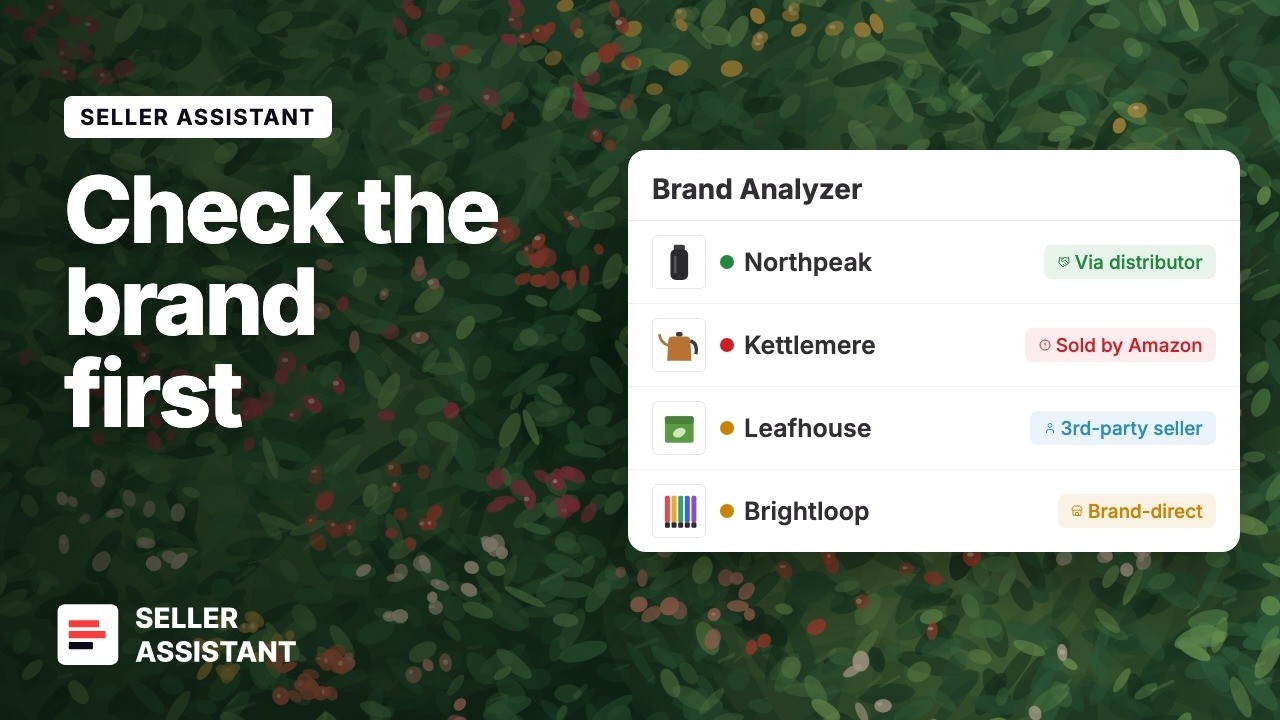
Check the brands on your list before you contact suppliers.
Analyze a supplier price list in bulk
Price List Analyzer matches every UPC in a supplier file to its Amazon listing and adds 120+ data points. It shows profit, ROI, margin and break-even price for FBA and FBM, with your own inbound shipping, prep and 3PL costs, from the current Buy Box price or the 30, 90 or 180-day averages. Filter the list, check restrictions in bulk, and push the shortlist to a purchase order.
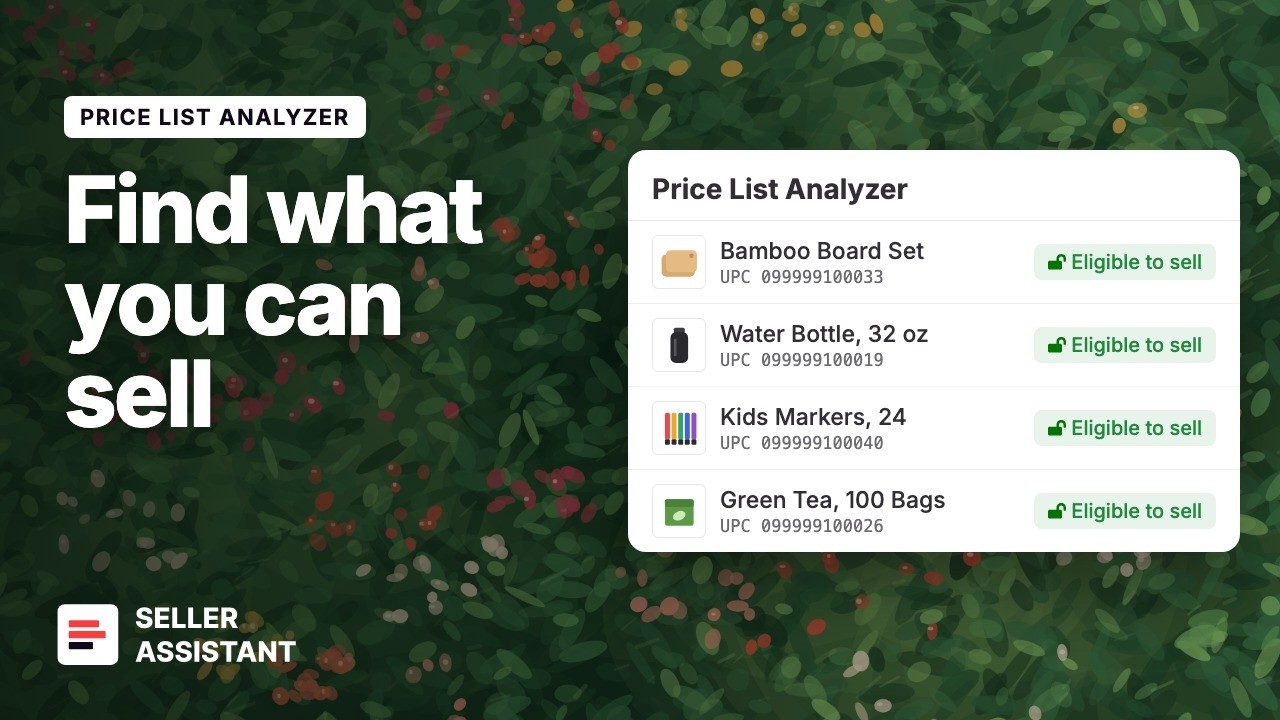
Upload your own supplier price list and see what you can sell.
Check single products on Amazon
The Seller Assistant Extension shows profit, restrictions, sales history and offers on every Amazon product page. On the search pages, Quick View shows the ASIN, BSR, category, FBA and FBM seller count, whether Amazon sells the product, your eligibility to sell it, and a red triangle for products with IP complaints. Use it to check a product idea while you browse a category.

Check product ideas on Amazon search pages.
Track what competitors add
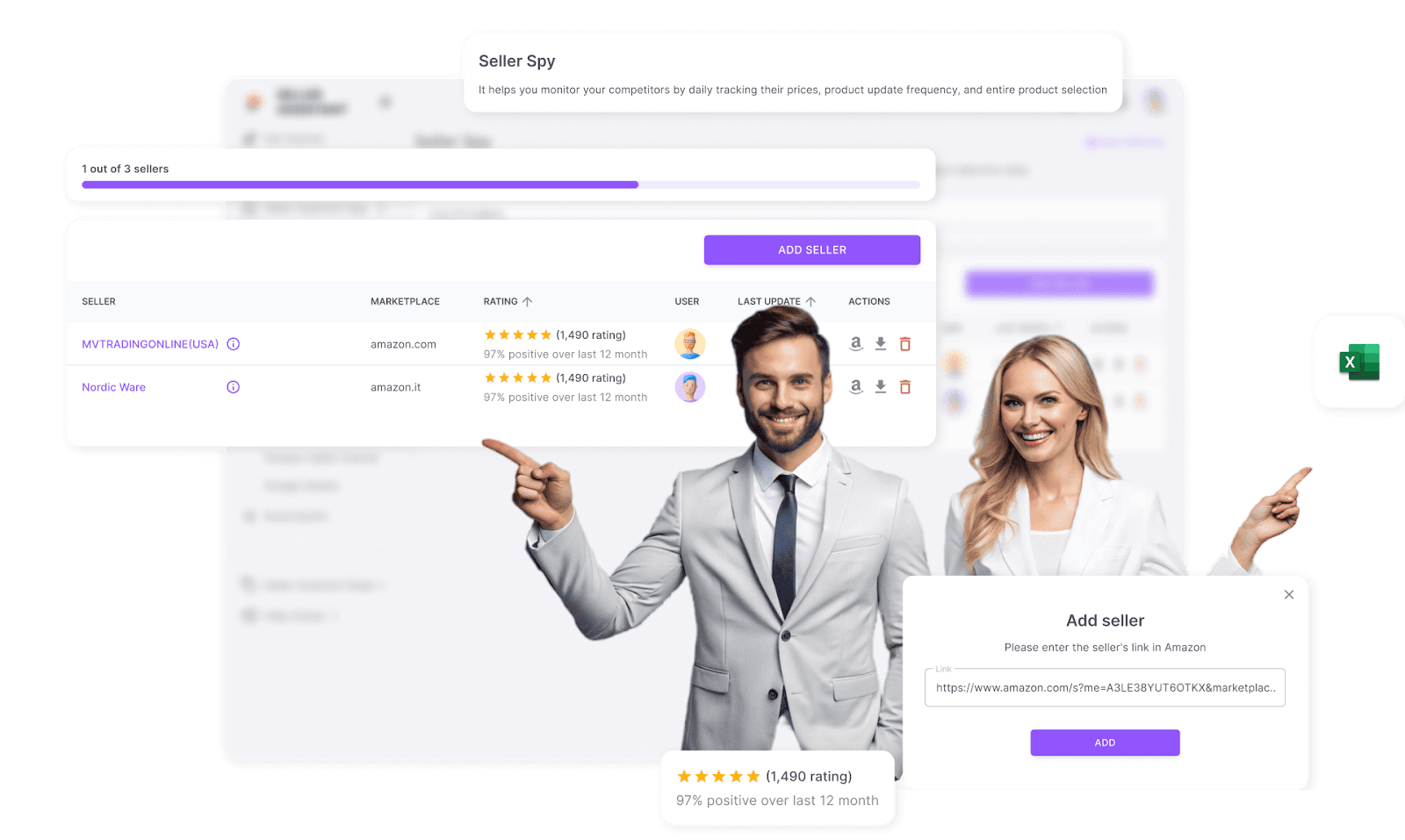
Seller Spy tracks competitor storefronts and updates them daily. It logs every product a seller adds or removes, with brand, category and model, and ranks brands by how many tracked sellers stock them. When several successful sellers add the same brand, check that brand next.
Find suppliers for a brand
When a brand passes the checks, AI Supplier Finder searches for manufacturers, authorized distributors and wholesalers that carry it. Each result has a high, medium or low match confidence, and marketplaces and retail stores are filtered out. For more ways to find suppliers, see 12 ways to find Amazon FBA suppliers.
FAQ
What are the best product ideas for Amazon FBA in 2026?
Small, light products in the standard size tiers that sell every month and that your account is allowed to sell. In 2026 the categories with the most wholesale leads per 1,000 matched supplier lines were Beauty & Personal Care (125), Kitchen & Dining (118), Arts, Crafts & Sewing (85), Sports & Outdoors (83), Pet Supplies (76), Grocery & Gourmet Food (72) and Toys & Games (71), according to Seller Assistant’s State of Amazon Wholesale, Q3 2026.
Did Amazon FBA fees increase in 2026?
Yes. From January 15, 2026, US FBA fulfillment fees increased by an average of $0.08 per unit, and from April 17, 2026, Amazon added a 3.5% fuel and logistics surcharge to fulfillment fees (about $0.17 per unit on average). For the median wholesale product, Amazon’s total cut stayed at about 40% of the sale price.
Which Amazon categories should FBA beginners avoid in 2026?
Books, Baby and Health & Household are the hardest for resellers, with low hit rates and many listings where one seller wins the Buy Box. Clothing has many leads, but 93% of its catalog items are new each year and supplier costs increased most there. Bulky items pay higher fulfillment fees, and the 3.5% surcharge grows with the fee.
How do I check if I can sell a product on Amazon?
Check the ASIN on your own seller account before you buy. Seller Assistant’s Bulk Restriction Checker checks up to 20,000 ASINs in one batch and marks each one as sellable, gated, blocked or error, with a link to the Seller Central approval page for gated items.
How much does it cost to start selling on Amazon FBA?
Amazon’s Professional selling plan costs $39.99 a month, and the Individual plan costs $0.99 per item sold. On top of that you pay for inventory, referral fees (8% to 17% in most categories), FBA fees, prep and shipping to Amazon.
Which Product Idea Fits Your Model?
- Wholesale sellers can start with Kitchen & Dining, Beauty & Personal Care or Grocery & Gourmet Food, where the report finds the most leads, and check the Buy Box owner on every listing.
- For wholesale catalogs that stay useful, try Arts, Crafts & Sewing, where only 32% of the items change each year.
- If you start a private label brand, pick a small, non-electric kitchen, beauty or pet accessory in a standard size tier, with no topical ingredients or food-contact certification to manage.
- Online arbitrage sellers can look at Toys & Games before Q4, where Amazon’s presence is falling, once your account meets the holiday requirements.
- In any model, avoid bulky items, Books and Baby in 2026 unless you already have approval and a supplier with good prices.